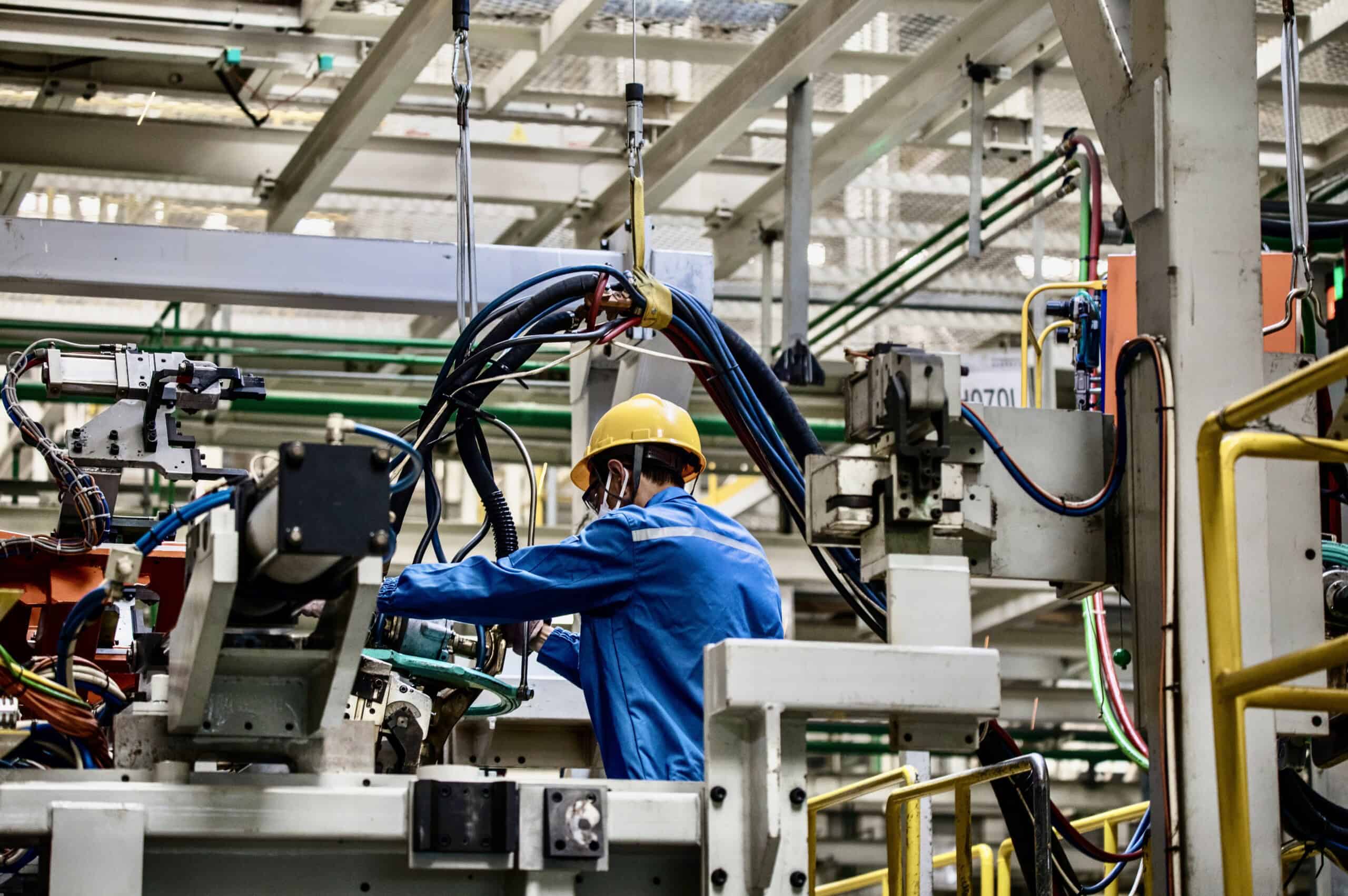
Despite creating some of the world’s most impressive companies, China’s supply side policy bias has generated incredible levels of local government debt, destructive price wars, and significant amounts of wasted resources. Leaders have recognized the unsustainability of this situation for years. As early as 2009, the State Council was highlighting overcapacity as a “serious problem” and clearly staking out a desire to mitigate its negative impacts.

Yet, for many reasons, Beijing has repeatedly pushed off dealing with overcapacity. A confluence of factors is making this situation increasingly untenable, and Beijing’s runway for punting on the issue is shrinking. China’s overcapacity problem is nearing its breaking point, and it does not appear Beijing has the ability to address it.
Overcapacity is the result of domestic policy choices that have led to the rapid, often economically nonviable, expansion of investment and production. This cycle has been sustained by China’s local governments, which have long been incentivized to expand investment and production over all else. These incentives have been compounded by fears of the widespread unemployment that might result from taking production offline. The consequence is thousands of small, unproductive companies, across numerous industries, kept afloat by local government support.

In the intervening years, dozens of policies have been introduced to tackle the issue with, at best, mixed success. Rather than reduce supply, Beijing has preferred to devise methods that allow the overcapacity train to keep chugging along. For example, local governments began massive off-balance sheet borrowing, with Beijing’s approval, to get around debt restrictions that could have limited unproductive investment. The Belt and Road Initiative and a widening trade surplus helped offshore some of China’s excess production. Meanwhile, growth remained strong throughout the 2010s — particularly in the property sector — so China’s economy was largely capable of absorbing manufacturing growth.
However, this state of play appears to be breaking down. Growth has slowed significantly, on the back of persistently weak domestic demand. The primary domestic absorber of industrial output — the property sector — is a shell of what it was five years ago. Local government balance sheets are maxed out. Countries around the world are erecting trade barriers against Chinese exports. The scaffolding supporting overcapacity is crumbling, and industrial production has failed to contract commensurately.
With weak demand at home and rising protectionism abroad, the market for Chinese production in many industries will shrink. Meanwhile, the local government finance tap is running dry. This means margins for many overproducers (already in the red) are poised to be squeezed further on both the revenue and capex side. Unless domestic demand stages an epic comeback, trade tensions disappear, or local governments find a new source of capital in short order, this pressure is likely to be the death knell for many companies.
In the near-term, Beijing has some limited options for squeezing the juice out of excess production. Officials have indicated they will increase the fiscal deficit, funds that could find their way into spending on industrial production. Exporters may devise creative ways to get around trade restrictions. One way or another, the overcapacity issue will soon reach a breaking point.
Buoyed for years by favorable economic conditions and creative policy solutions, the “serious problem” of China’s overcapacity is reaching its limit.
Offlining capacity will be a painful process. The necessary market consolidation will lead to widespread corporate bankruptcies. Unemployment will rise. People will be angry. We got a taste of this during the property sector crash, the fallout of which has been extremely difficult in multiple areas of the economy and led to isolated instances of unrest. Given the scale, Beijing has managed the disruption relatively well, though the full impact may not yet be clear.

A key lesson from the property sector is that problems of overinvestment and excess production compound over time, and policy becomes less capable of mitigating the harmful effects of a slowdown the longer the issue goes unaddressed. As former Ministry of Industry and Information Technology Chief Engineer Xu Hongren put it in 2012, “Severe overcapacity disrupts the normal market order and must be effectively guided, restrained, and resolved in a timely manner.”
Overcapacity is a multi-industry problem, but solutions come in two basic forms: demand expansion and supply reduction, and China will need a mix of both to address overcapacity. Beijing must do more to raise disposable income amongst Chinese citizens. There are a range of measures available here, though policymakers have long struggled to put them into action. Accomplishing supply reduction requires shifting local government incentives, cracking down on intractable local protectionism, and, relatedly, widespread market consolidation. There has been some progress here, but it is slow going.
These are all policy prescriptions that have been proposed, often at the highest levels, for years. In fact, during my tenure as President of the EU Chamber of Commerce in China, we released two reports, one in 2009 and one in 2016, highlighting the severity of the issue and proposing these solutions. The prospect of Beijing taking proactive measures on these fronts now, at a time when the struggling economy is being bolstered by exports and manufacturing — the very segments that are implicated in excess production — is slim. Therefore, the issue of industrial overcapacity, like the issue of speculation and overbuilding in the property sector, will likely be resolved mostly through gravity. Companies and industries that have been propped up for years could crumble very quickly, leaving officials scrambling to respond.
I do not pretend to know precisely how it will play out. Different industries and different localities will be impacted in different ways. My message is simply that downward pressure on demand is becoming stronger and the toolkit for propping up oversupply is wearing increasingly thin. Buoyed for years by favorable economic conditions and creative policy solutions, the “serious problem” of China’s overcapacity is reaching its limit.

Jörg Wuttke is a Partner with the DGA Group and is based in the Washington DC. Until July 2024 Mr. Wuttke was Vice President of BASF China for 27 years. He was President of the European Union Chamber of Commerce in China from 2007 to 2010, 2014 to 2017 and again from 2019 to 2023. From 2001 to 2004 Mr. Wuttke was the Chairman of the German Chamber of Commerce in China. Since its establishment in 2013, Mr. Wuttke is member of the Advisory Board of Germany’s foremost Think Tank on China, Mercator Institute for China Studies (MERICS), in Berlin. He lived in China for more than 35 years.